


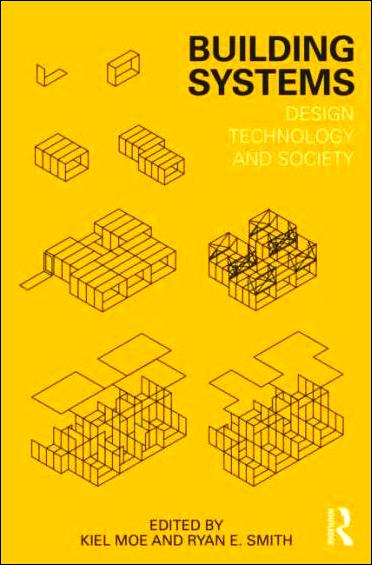
Description
We can no longer view building components as artifacts (a brick or a boiler) or as autonomous systems (air conditioning or prefabrication). Rather these components and systems are part of much larger systems of which architects are one agent. This book will help architects more broadly envision these networks including:
- canonical texts as well as contemporary thinking from well known theorists and practitioners, each contribution frames a specific range of technology in relation to society such as building process, products, economies and ecologies
- clearly structured, the book is divided into three parts; each accompanied by a comprehensive introduction by the editors
- an annotated bibliography provides a glossary of further reading
- illustrated throughout with over 100 illustrations
CONTENTS
- Kiel Moe & Ryan E. Smith: Systems, Technics, and Society
Part 1: Building Systems
- Antoine Picon: Construction History: Between Technological and Cultural History
- Tom F. Peters: How the Introduction of Iron in Construction changed and Developed Thought Patterns in Design
- Philippe Block: Retrofitting and Redacting Masonry Engineering
- Ivan Rupnik: Building Systems/Building Territories: Industrialized Housing Delivery and the Role of the Architect
Part 2: Building Economies
- Mary McLeod: “Architecture or Revolution”: Taylorism, Technocracy, and Social Change
- Tom Leslie: Glass and Light: The Influence of Interior Illumination on the “Chicago School”
- Daniel Abramson: Obsolescence: Notes Towards a History
- Ellen Grimes: Risky Business, Fishy Forms
Part 3: Building Ecologies
- William Braham: Household Conditioning (if you are cold, put on a sweater)
- Hillary Sample: A House within a House
- Steven Moore & Barbara B. Wilson: Architectural Production and Sociotechnical Codes: A Theoretical Framework
272 pages, b&w ills / 15,5 x 23,5 cm / English


Reviews
There are no reviews yet.