


Description
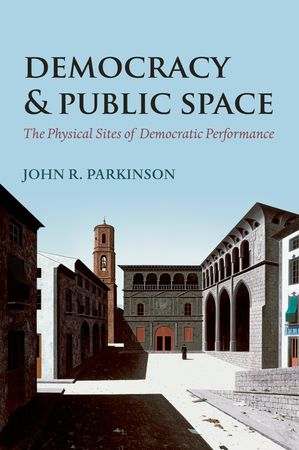
Democracy and Public Space. The Physical Sites of Democratic Performance.
- A major revaluation of the interactive nature of democracy in a digital world
- Brings together two literatures – liberal political theory and urban theory – that have never been seriously brought together before
- Combines theory with first-hand observation and interviews
- Richly illustrated
In an online, interconnected world, democracy is increasingly made up of wikis and blogs, pokes and tweets. Citizens have become accidental journalists thanks to their handheld devices, politicians are increasingly working online, and the traditional sites of democracy – assemblies, public galleries, and plazas – are becoming less and less relevant with every new technology. And yet, this book argues, such views are leading us to confuse the medium with the message, focusing on electronic transmission when often what cyber citizens transmit is pictures and narratives of real democratic action in physical space. Democratic citizens are embodied, take up space, battle over access to physical resources, and perform democracy on physical stages at least as much as they engage with ideas in virtual space. Combining conceptual analysis with interviews and observation in capital cities on every continent, John Parkinson argues that democracy requires physical public space; that some kinds of space are better for performing some democratic roles than others; and that some of the most valuable kinds of space are under attack in developed democracies. He argues that accidental publics like shoppers and lunchtime crowds are increasingly valued over purposive, active publics, over citizens with a point to make or an argument to listen to. This can be seen not just in the way that traditional protest is regulated, but in the ways that ordinary city streets and parks are managed, even in the design of such quintessentially democratic spaces as legislative assemblies. The book offers an alternative vision for democratic public space, and evaluates 11 cities – from London to Tokyo – against that ideal.
CONTENTS
- 1: Introduction
Part I: The Theory of Democratic Public Space
- 2: Democratic Theory, Democratic Performance
- 3: Theorizing Public Space
- 4: Place and Politics
Part II: Public Space and Democratic Performance
- 5: Assemblies I: Performing Public Roles
- 6: Assemblies II: The Public and Accessibility
- 7: Protest and the Plaza: Engaging the Formal Public Sphere
- 8: The City as Representative Space
- 9: Conclusions and Implications
- References
246 pages / 15,5 x 23,5 cm / English


Reviews
There are no reviews yet.