

Description
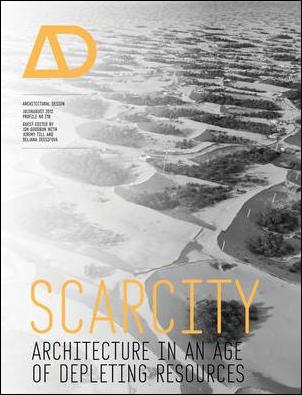
Currently, the world is experiencing a ‘perfect storm’ of social, political, economic and ecological proportions. The full extent and severity of present conditions are yet to be determined. One thing, however, is certain: the foreseeable future will not be like the recent past. Leading analysts of all the major resource domains – water, food, material, energy and finance – are all telling us that our global industrial growth models, driven by speculation on unstable financial markets, are taking the planet to the brink of chronic scarcity. Some of these shortages are determined by natural limits of mineral resources, such as petroleum and coal, and others by the mismanagement of natural resources, such as water, timber and food; a situation that is often characterised by uneven social and geographic distribution of supplies. In architecture, concerns about depleting material and energy sources have largely been centered on the more emollient category of ‘sustainability’. In the next decade, however, as the situation becomes more pressing, architects and designers will need to confront the reality of scarcity. There are many ways that architecture, urban planning and design research can tackle such issues: from developing new forms of analysis of global flows and scarcities, to specific local and global design-based solutions. A full engagement with these issues has the potential to completely reconfigure design practice in radically new, post-sustainable directions.
CONTENTS
- Jon Goodbun, Jeremy Till, Deljana Iossifova: Introduction: Themes of Scarcity
- André Viljoen, Katrin Bohn: Scarcity and Abundance: Urban Agriculture in Cuba and the US
- Maria Kaika, Erik Swyngedouw: Cities, Natures and the Political Imaginary
- Jon Goodbun, Karin Jaschke: Architecture and Relational Resources: Towards a New Materialist Practice
- Jody Boehnert: Visualising Ecological Literacy
- Jeremy Till, Tatjana Schneider: Invisible Agency
- Ulysses Sengupta, Deljiana Iossifova: Systemic Diagramming: An Approach to Decoding Urban Ecologies
- Jon Goodbun: Flexibility and Ecological Planning: Gregory Bateson on Urbanism
- Enzio Manzini: Erroe-Friendliness: How to Deal with the Future Scarcest Resource: The Enviromental, Social, Economic Security. That i, How to Design Resilient Socio-Technical Systems
- Clare Bass, Flora Bowden, Kate McGeevor: Can an Urban Community Independently Runs Its Own Waste Services?
- Benedict Singleton: Anthropocene Nights
- Rob Hopkins: Peak Oil and Transition Towns
- Timothy Morton: Everything We Need: Scarcity, Scale, Hyperobjects
- Douglas Spencer: Invensting in the Ground: Reflections on Scarcity, Remediation and Obdurate Form
- Andreas Rumpfhuber, Michael Klein, Georg Kolmayr: Almost All Right: Vienna’s Social Housing Provision
- Arna Mathiesen: Icelandic Initiatives
- Kate Soper: Beyond the Scarcities of Affluence: An “Alternative Hedonist” Approach
- Michael Sorkin: New York City (Steady) State
- Alejandro Zaera-Polo: No Frills and Bare Life: Cheapness and Democracy
- Daliana Suryawinata, Winy Mass: Austeria: City of Minimum Consumption
- Liza Fior: Mapping in Hackney Wick and Fish Island: Observation is Proposition
- Edward Robbins, Christian Hermansen Cordua, Barbara E. Ascher: Norway Was Never So Poor!
- Steve Parnell: The Collision of Scarcity and Expendability in Architectural Culture of the 1960s and 1970s
- Hattie Hartman: Is Sustainability just another “Ism”?
144 page, color & b&w ills / 21 x 27,5 cm / English


Reviews
There are no reviews yet.