

Description
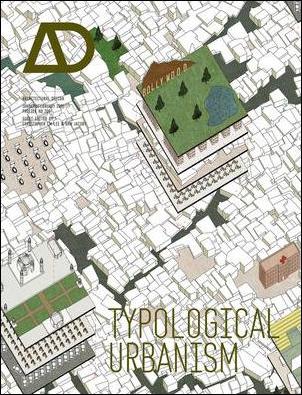
How can architecture today be simultaneously relevant to its urban context and at the very forefront of design? For a decade or so, iconic architecture has been fuelled by the market economy and consumers’ insatiable appetite for the novel and the different. The relentless speed and scale of urbanisation, with its ruptured, decentralised and fast-changing context, though, demands a rethink of the role of the designer and the function of architecture. This title of 2 confronts and questions the profession’s and academia’s current inability to confidently and comprehensively describe, conceptualise, theorise and ultimately project new ideas for architecture in relation to the city. In so doing, it provides a potent alternative for projective cities: Typological Urbanism. This pursues and develops the strategies of typological reasoning in order to re-engage architecture with the city in both a critical and speculative manner. Architecture and urbanism are no longer seen as separate domains, or subservient to each other, but as synthesising disciplines and processes that allow an integrating and controlling effect on both the city and its built environment.
CONTENTS
- Spotlight: Visual highlights of the issue
- Christopher CM Lee and Sam Jacoby: Introduction: Typological Urbanism and the Idea of the City
- Marina Lathouri: The City as a Project: Types, Typical Objects and Typologies – A persistent architectural category, type is traced back by Lathouri to the 18th century.
- Pier Vittorio Aureli: City as Political Form: Four Archetypes of Urban Transformation
- Peter Carl: Type, Field, Culture, Praxis
- Martino Tattara: Brasilia’s Superquadra: Prototypical Design and the Project of the City
- Michael U. Hensel: Type? What Type? Further Reflections on the Extended Threshold
- Caroline Bos & Ben van Berkel/UNStudio: Typological Instruments: Connecting Architecture and Urbanism
- João Bravo da Costa: Penang Tropical City, Penang, Malaysia – OMA – As epitomised by OMA’s project for Penang, the magnitude of urbanisation in East Asia requires an innovative approach to type.
- Toyo Ito & Associates, Architects: Singapore Buona Vista Masterplan Competition, Singapore /
- Kazuyo Sejima + Ryue Nishizawa/SANAA: 21st Century Museum of Contemporary Art, Kanazawa, Ishikawa Prefecture, Japan
- l’AUC Architects and Urbanists (François Decoster, Caroline Poulin, Djamel Klouche): The Metropolis as Integral Substance
- DOGMA (Pier Vittorio Aureli and Martino Tattara): A Simple Heart: Architecture on the Ruins of the Post-Fordist City
- Serie Architects: Xi’an Horticultural Masterplan, Xi’an, China
- David Grahame Shane: Counterpoint: Transcending Type: Designing for Urban Complexity
136 pages, color ills / 21 x 27,5 cm / English


Reviews
There are no reviews yet.