

Description
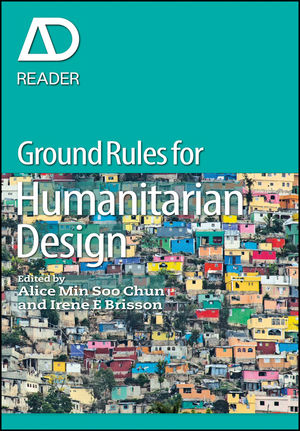
Ground Rules in Humanitarian Design establishes essential foundations for thinking about humanitarian design and its role in global change. Outlining a vital framework for designing for impoverished and disaster-stricken communities, this informative guide explores the integration of culture, art, architecture, economy, ecology, health, and education. Experts on land, health, water, housing, education, and planning weigh in with best practices and critical considerations during the design process, and discussion of the environmental considerations and local materials/skills will broaden your understanding of this nuanced specialty. Richly illustrated, this guide combines graphic documentation of projects, maps, and data-tracking developments from Asia, Africa, and the Americas to underscore the complexities of this emerging and evolving field.
The ambition to provide humanitarian architecture for areas in acute need is driving design innovation worldwide among both practitioners and educators. This book provides an indispensable resource for those engaged in the search for the sustainable inclusion of cultural code and compassion as a technology for design innovation.
- Learn how to approach the problem of humanitarian design
- Understand the cultural factors that play into development
- Develop a new framework for planning post-disaster design
- See how humanitarian design is pushing the industry forward
While still in college, students are being given the opportunity to directly participate in programmes that provide vital facilities for communities abroad. While these international initiatives remain largely ad hoc, this book provides parameters for engagement and establishes best practices for approaching these projects with a global perspective. With expert insight and practical strategies on the ground, Ground Rules in Humanitarian Design is an essential resource for architects at any level.
CONTENTS
Introduction
- Ground Rules for Humanitarian Design
Part 1 – Histories of Humanitarian Design and Aid
- Humanitarian Design. Notes for a Definition / Christian Hubert and Ioanna Theocharopoulou
- Fifty Years of the Community-Led Incremental Development. Paradigm for Urban Housing and Place-Making / John FC Turner and Patrick Wakely
Part 2 – Land
- Real Estate and Property Rights in Humanitarian Design / Jesse M Keenan
- Remediating Ecocide / Alice Min Soo Chun
Part 3 – Crisis in Health and Culture
- Crisis Architecture. Conflict, Cultures of Displacement and Crisis-forms / J Yolande Daniels
- Emergency Medical Structures / Sabrina Plum
Part 4 – Water and Sanitation
- Fluid Matters. On Water and Design / Elizabeth Parker
- Water, Sanitation and Hygiene Interventions. Household Water Treatment and Safe Storage to Reduce the Burden of Diarrhoeal Disease in Developing Countries / Daniele Lantagne
Part 5 – Ecology and Humanitarian Design
- Architectures of Eco-Literacy / Eric Höweler and J Meejin Yoon
- Circling Research with Design. NLÉ’s African Water Cities Project and Prototype Floating School for Makoko / Kunlé Adeyemi
Part 6 – Local Materials and Local Skills
- Intelligent Materials and Technology / Alice Min Soo Chun
- One City / Merritt Bulcholz
Part 7 – Shelter and Housing
- Missing Scales / Deborah Gans
- reCOVER. Emergency Shelter Interventions / Anselmo G Canfora
Part 8 – Education and Practice
- Humanitarian Architecture Is Hip. Now What? / Eric Cesal
- Reading Codes Is a Whole New World / Grainne Hassett
Part 9 – Architecture, Planning and Politics
- Delmas 32. A Post-Disaster Planning Experience in Haiti / Sabine Malebranche
- Building On, Over, With. Postcolonialism and Humanitarian Design / Irene E Brisson
Select Bibliography, Index
264 pages / 17 x 24,5 cm / English


Reviews
There are no reviews yet.