


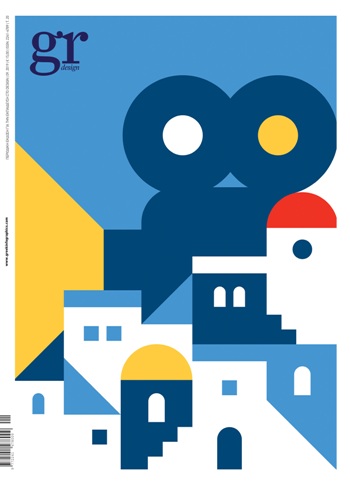
Description
CONTENTS
News and observations
- Downtown development, Pristina (XK)
- Information pavilion, Barcelona (ES) by Peris+Toral
- Book: Recoded City: Co-Creating Urban Futures
- Skywalk, Dolní Morava (CZ) by Fránek Architects
- City theatre, Lappeenranta (FI) by ALA Architects
- Kiosk competition, Athens (GR)
- Moviegoer 14: High-Rise
- Leisure park, Poltava (UA) by YOD Design Studio
- and more…
New projects
- Public library, Varna (BG) by Architects for Urbanity
- Medical school and health sciences building, Nicosia (CY) by SV60 Cordón & Liñán Arquitectos
- Corviale social housing regeneration, Rome (IT) by StudioInsito
- Extension to the Wien Museum, Vienna (AT) by winkler + ruck and Ferdinand Certov
Fluidity of spaces on all scales
- Pascale Dalix and Frédéric Chartier started their office a decade ago. Coming from big firms like Herzog & de Meuron and Dominique Perrault, it is easy to recognize where they learned to play with surfaces and how to combine rationality and poetry. The shiny surfaces of the young workers’ hostel, crèche, and studios in Paris are quite different from the edgy facades of the Primary School for Sciences and Biodiversity in Boulogne-Billancourt, but the reasoning behind both is the same: ‘It’s the first question to ask and the last to answer, because we keep researching better solutions during the process: How can we enrich the programme?,’ say Chartier Dalix.
New buildings
- Cube Design Museum, Kerkrade (NL) by Shift architecture urbanism
- House on Vodno, Skopje (MK) by Sergej Nikoljski and Ivan Mirkovski
- Social housing, Dubrovnik (HR) by Ivanišin.Kabashi.Arhitekti
- Homes for the elderly, London (UK) by Bell Phillips Architects
- Conservatory, Nantes (FR) by RAUM and L’Escaut
- Television headquarters, Pristina (XK) by Anarch
First realized projects
- Town hall by Demogo, Gembloux (BE)
Focusing on European countries and regions
- Situated between Scandinavia and Eastern and Western Europe, it is no surprise that economically (and historically) Lithuania deals mostly with Russia and Poland. Its architectural scope, however, is a lot broader. Its architects are attempting to implement new values in a nation that has become one of the fastest-growing economies in the EU. Needless to say, new Lithuanian architecture is on the rise.
Think brick
- Building anew in our century within the Old Town of Riga always turns out as some sort of fiasco. Either too blank or too obvious, new architecture in the Old Town is still rather rare and not much loved in the eyes of locals and visitors alike, who both prefer the safe, postcard look of a typical Hanseatic town. A new residential building at 11 Skarnu Street, however, proves that contemporary architecture can work well in this historic context. It is bold, beautiful, and clad in red brick, a much-loved but forgotten material that has been used in the region for centuries. Ieva Zībārte details the emergence of this project by local architects Jaunromāns un Ābele.
Small miracles
- Litomyšl has become a phenomenon of its kind. In comparison to any other Czech town, it strikes the visitor with a unique density, variability, and quality of contemporary architecture and urban environment. Yet, its recent structures do not form a new district. On the contrary, they supplement the existing valuable landmarks, along with a splendid castle that is also a UNESCO World Heritage Site.
New architect’s residence
- Konieczny’s Ark by KWK Promes, Brenna (PL)
Buildings from the margins of modern history
- A recognizable landmark, the Visoko Hotel (BA) by Zlatko Ugljen was built on the historic centre’s margin, next to the river Bosna and a park. Its dynamic white cube dominates the skyline, and refers to the existing cultural context without historical mimicry.
62 pages, color ills / 24 x 33 cm / English


Reviews
There are no reviews yet.