


Description
The built environment exerts a major influence on society and our surroundings, and today one of the most important concerns of architectural design is the realization of sustainability. By now, it is rare to see it discussed without the words green or environmentally friendly. However, it is not easy to clarify what we have to do, and how, to achieve sustainability in the built environment.
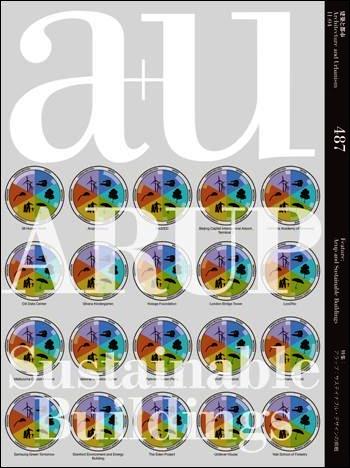
This issue features Arup and sustainable buildings. With more than 90 offices in over 30 countries, Arup is one of the world’s leading professional services firms. It is known as a pioneer in environmental engineering as well as in structural engineering. Arup is not only well versed in assessment methods such as LEED® in the USA, BREEAM in the UK, Green Star in Australia, and CASBEE in Japan, but has also developed its own methodology for the realization of sustainability. Arup’s ‘Designing Sustainable Buildings’ strategy has six objectives, involving carbon, water, materials, climate change, community and the environment, and operations. These six objectives are provided to the client and shared with the design team on every project. In his essay Alistair Guthrie explains the strategy and outlines the methodology in detail. The graphic symbols beside the title of each project in this issue were visualized by Arup in order to show the six objectives and the degree of achievement of the ‘Designing Sustainable Buildings’ strategy. (See p. 14 for how to read the symbols.)
This issue introduces about 50 works as case studies categorized by building type. Most have been completed over the last ten years. This issue also features three essays: one on the concept of total design proposed by Ove Arup, the founder of Arup, and its reflection in the work of the firm; another on integrated urbanism, dealing with masterplan proposals for communities and wider areas; and another on architecture for the ecological age, which looks forward to the city of 2050. There is also a glossary on sustainable building at the back of the issue.
We hope that this issue will provide the reader with concrete and practical insights into sustainable design. a+u would like to express our appreciation to Alistair Guthrie and Arup staff from all over the world for their cooperation, including the Tokyo office, which provided guidance on the translation of engineering terminology into Japanese. (a+u)
CONTENTS
Feature: Arup and Sustainable Buildings
- Alistair Guthrie: The Challenge of Sustainability
Arts and Leisure
- The Eden Project
- DPI Queenscliff
- Beijing National Aquatics Center
- California Academy of Sciences
- Melbourne Cricket Ground
- Westport Lake Visitor Centre
- Medieval and Renaissance Galleries, V&A
Education and Research
- Nottingham University
- Kresge Foundation
- Druk White Lotus
- Ghana Kindergarten School
- Malawi Schools
- Martin Ansley-Young: How a Global Firm can Make a Difference
- Dartington Primary School
- Jessop West
- Acharacle Primary School
- Princeton University Chemistry Building
- Yale School of Forestry
- Kirsch Centre for Environmental Studies
- Stanford Environment and Energy Building
- Ben Richardson: Arup and Sustainable Design
Housing
- BedZED
- One Earth Homes, Upton Square
- Barratt Green House
- Redevelopment of Upper Ngau Tau Kok Estate
- Phases 2 & 3
- Samsung Green Tomorrow
Offices (new and existing)
- Arup Campus Phase One
- CitiData Centre
- Harlequin 1
- Plantation Place
- 3 Assembly Square
- Ropemaker Place
- Worldwide Fund for Nature HQ
- RAAF Richmond
- The Shard (London Bridge Tower)
- Beijing Nokia BDA Campus
- Parkview Green Beijing
- 39 Hunter Street
- Joseph Vance Building
- Unilever House
- Sophie Noble and Malcolm Smith: Integrated Urbanism
- Urban Planning and Travel
- Beijing Capital International Airport Terminal 3
- Zurich Airport
- Sunny Bay Station
- Low2No
- Abengoa Business Park
- Mallorca Beach Front
- Declan O’ Carroll and Michael Beaven: Architecture for the Ecological Age: the City in 2050
Sustainable Buildings Glossary
162 pages, color ills/ 22 x 29 cm / Japanese, English


Reviews
There are no reviews yet.